Ecolens
AI-gedreven beleidsontwikkelingstool voor klimaatgerelateerde besluitvorming.
Domain
Public policymaking
Domein
Public policymaking
Client(s)
Cliënt(en)
My role
UX Designer, Stakeholder manager
Mijn rol
UX Designer, Stakeholder manager
Project duration
6 weeks
Projectduur
6 weeks
Team (3)
Arianna Bardelli,
Fatemeh Azhm,
Stefan van Brummelen
Design challenge
How to integrate AI into policymakers' workflows to enhance efficiency while ensuring trustworthiness and compliance with EU laws?
Problem statement - improve policymaking workflows
The Ministry of Economic Affairs aims to improve policymaking workflows using AI. As a designer, the specified goal is: What role can AI play as a tool that adapts to the existing workflows of policymakers while ensuring trustworthiness and compliance with EU laws?
Het verbeteren van beleidsontwikkelingsprocessen m.b.v. AI
Het Ministerie van Economische Zaken wil beleidsprocessen verbeteren met behulp van AI. Als ontwerper was de specifieke doelstelling: Welke rol kan AI spelen als hulpmiddel dat zich aanpast aan de bestaande workflows van beleidsmakers, terwijl betrouwbaarheid en naleving van EU-wetgeving worden gewaarborgd?
Doel
Ecolens - simulating policy impacts for informed climate decisions
Ecolens supports policymakers in climate-related decision-making by simulating and visualizing the impact of their draft policies on human and non-human entities in the context of use.
Ecolens – impact simuleren voor klimaatbeslissingen
Ecolens ondersteunt beleidsmakers bij klimaatgerelateerde besluitvorming door de impact van hun conceptbeleid te simuleren en te visualiseren – zowel op menselijke als niet-menselijke entiteiten – binnen de context van gebruik.
Oplossing
0. Stel een ‘perspectief’-lens in voor het AI-model om geüploade conceptdocumenten te analyseren.
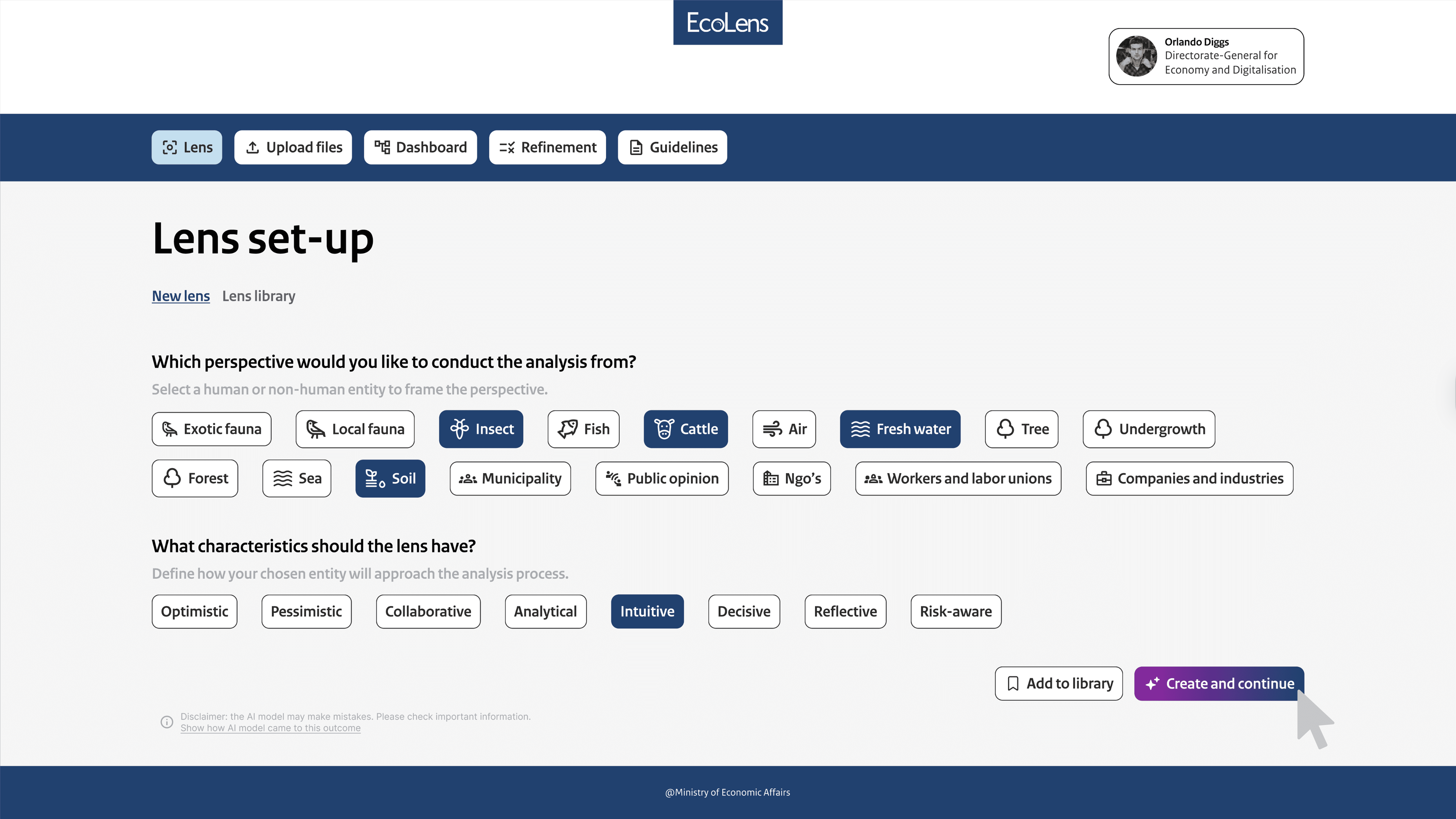
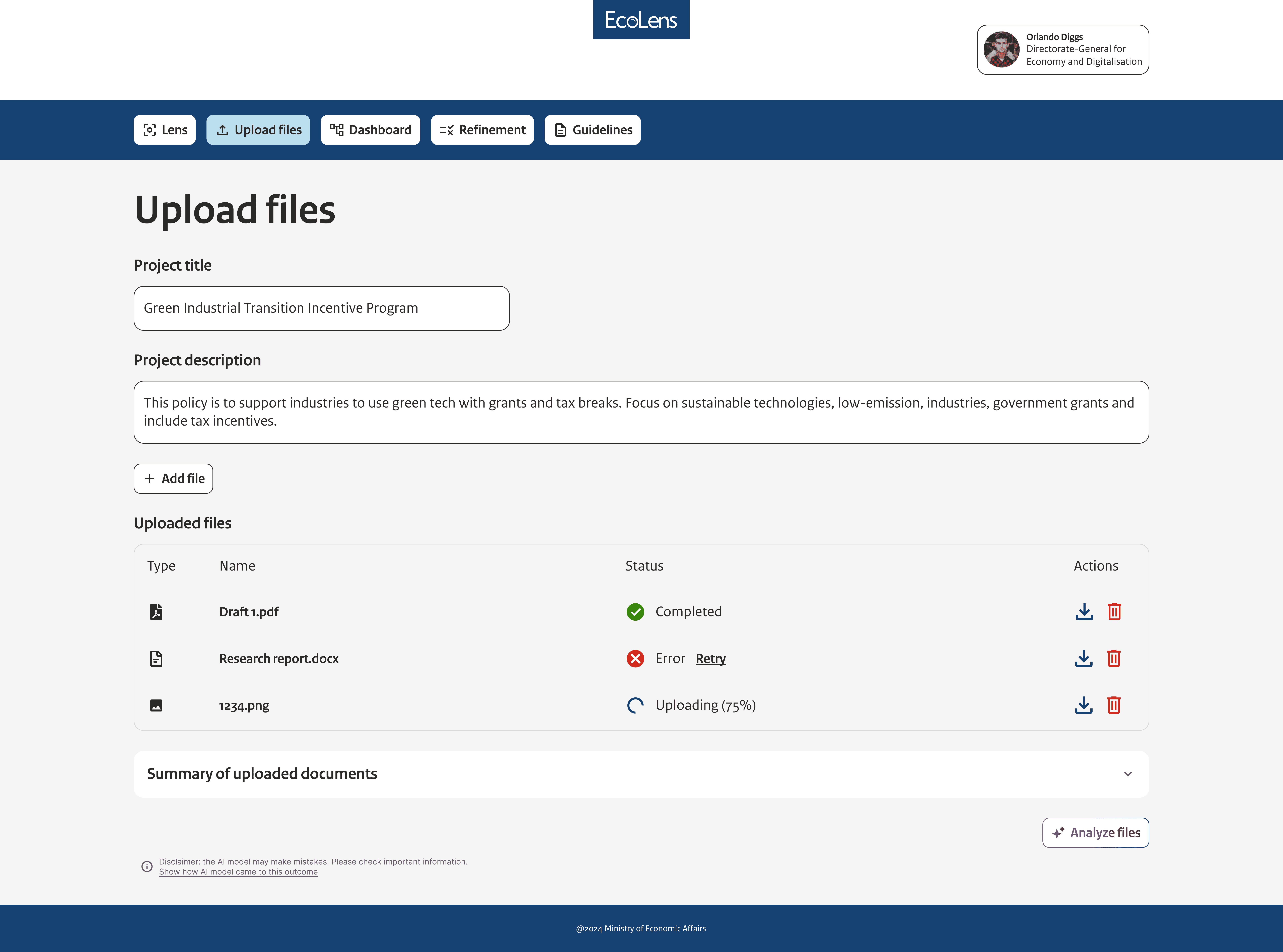
1. Upload beleidsgerelateerde bestanden
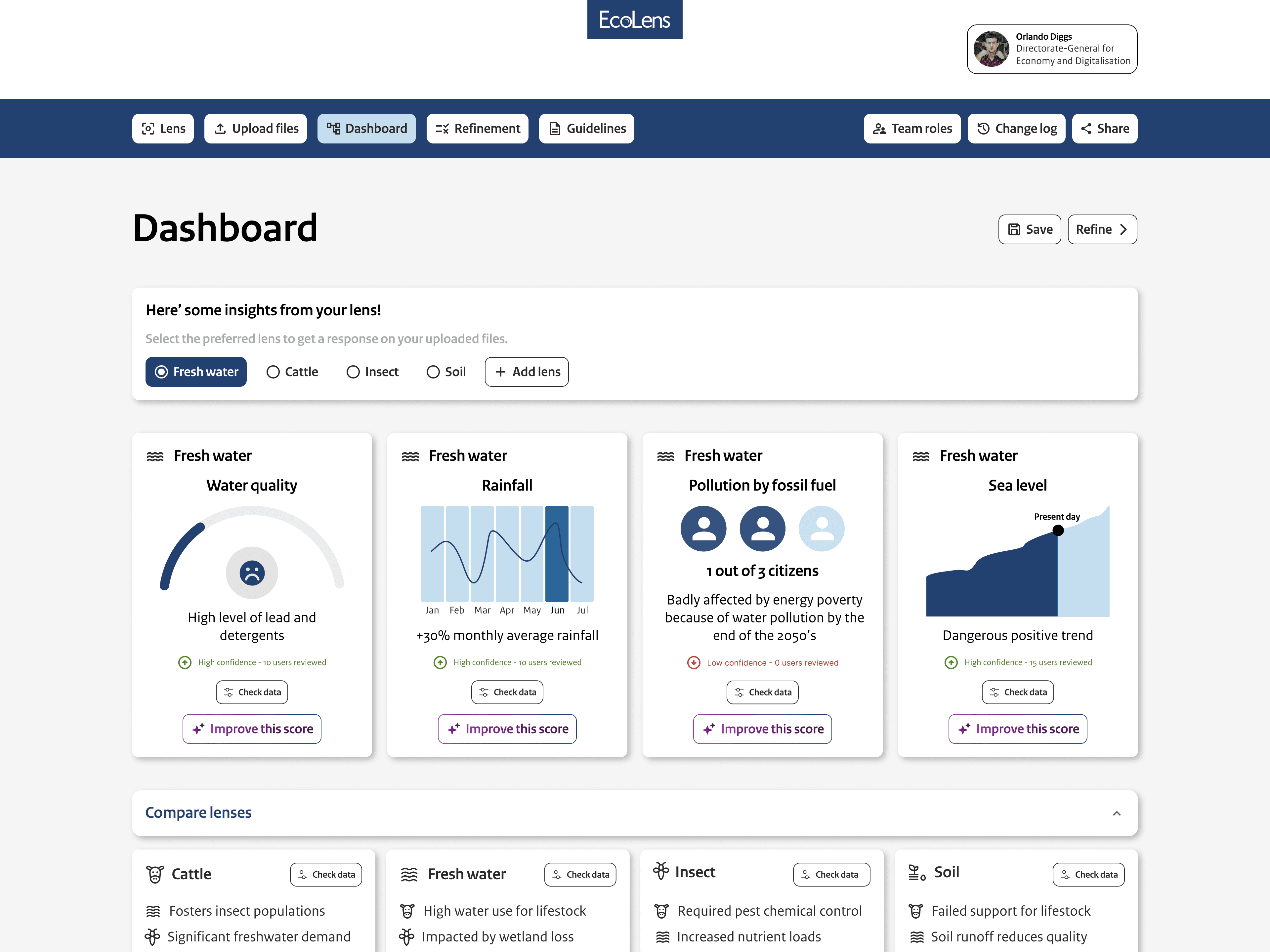
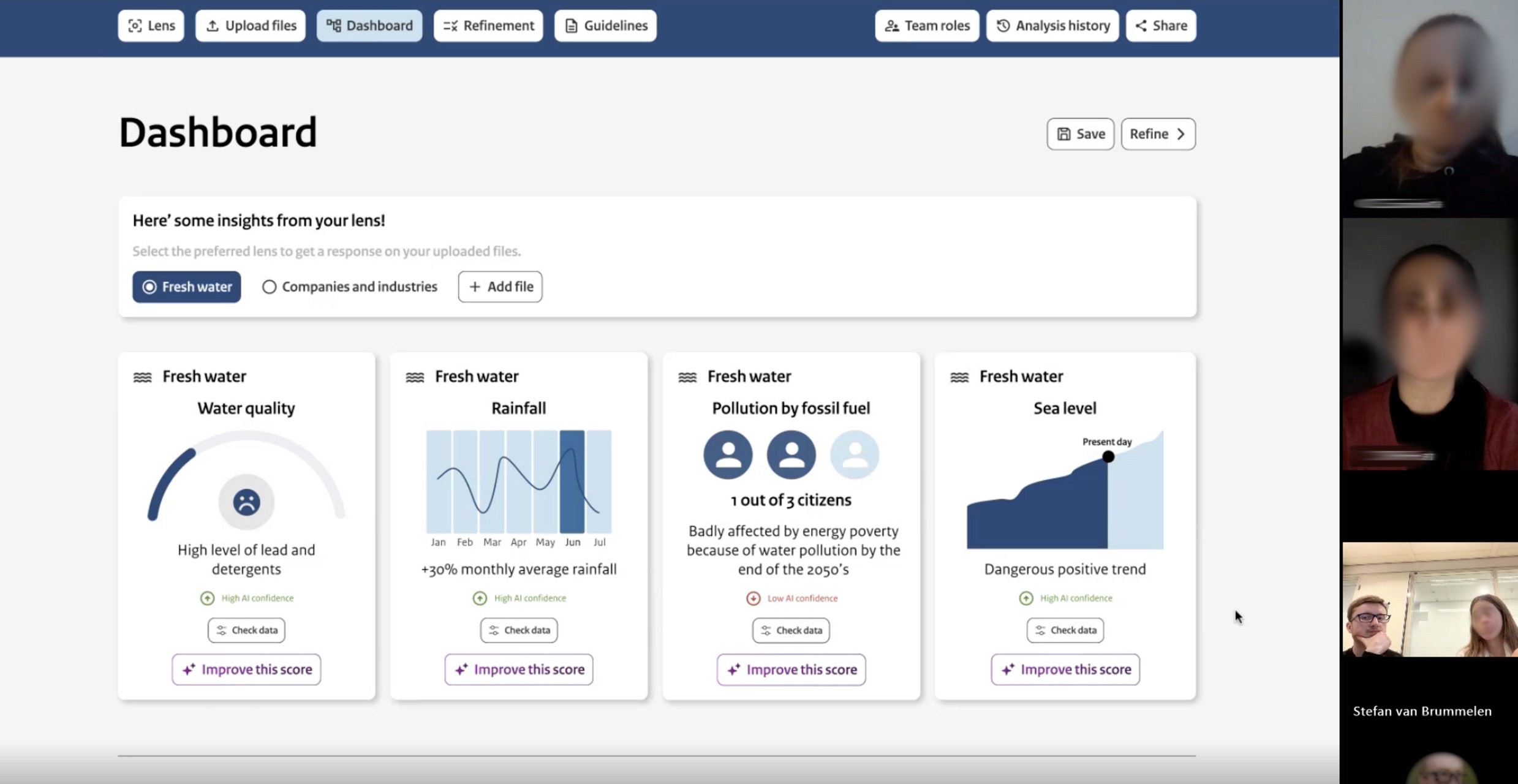
2. Dashboard met de reactie van de lens(en) en datavisualisaties (gebaseerd op de geüploade bestanden)
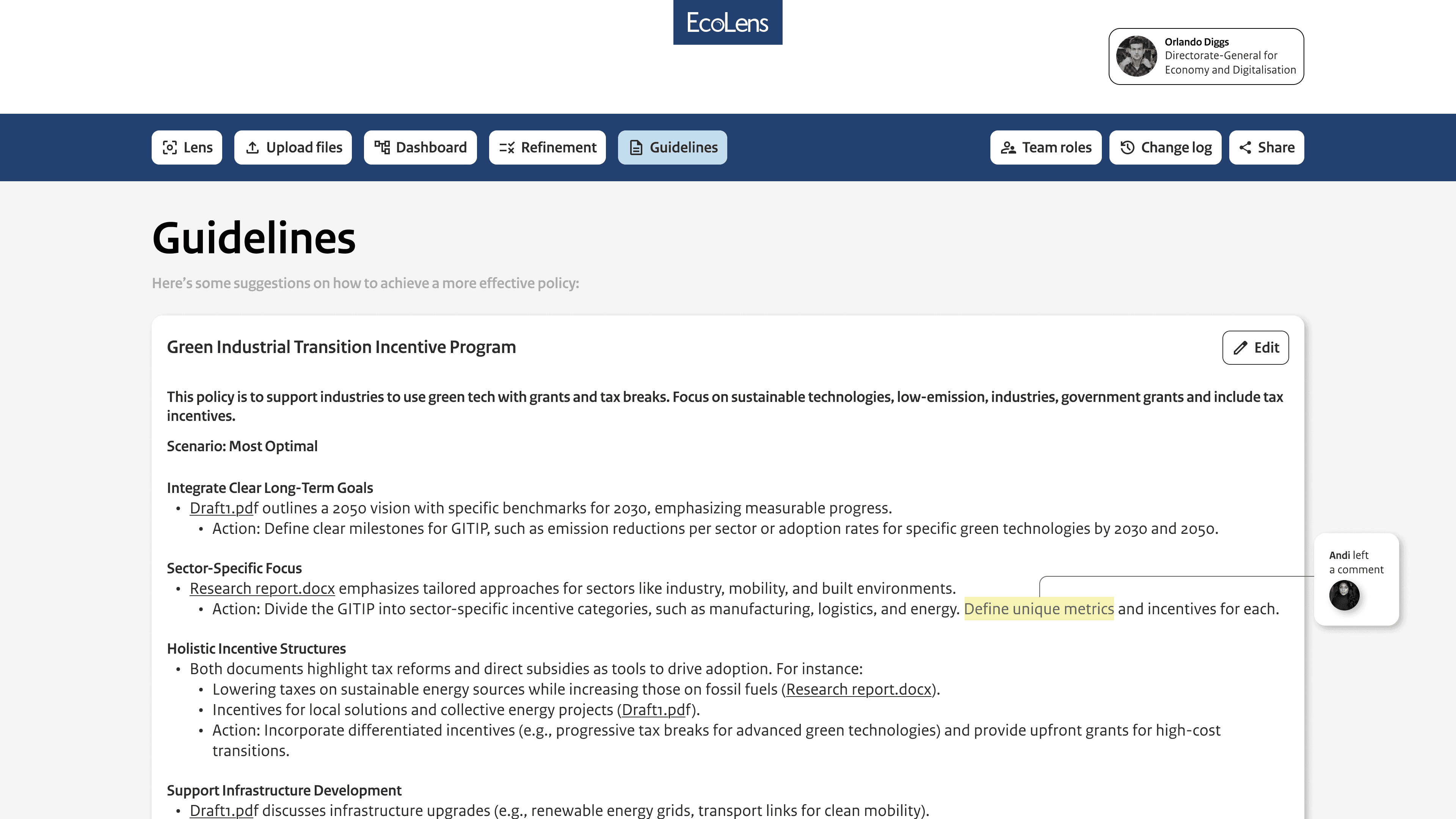
3. Richtlijnen voor verbeteringen op basis van de lens en het geselecteerde datavisualisatiescenario
AI Disclosure
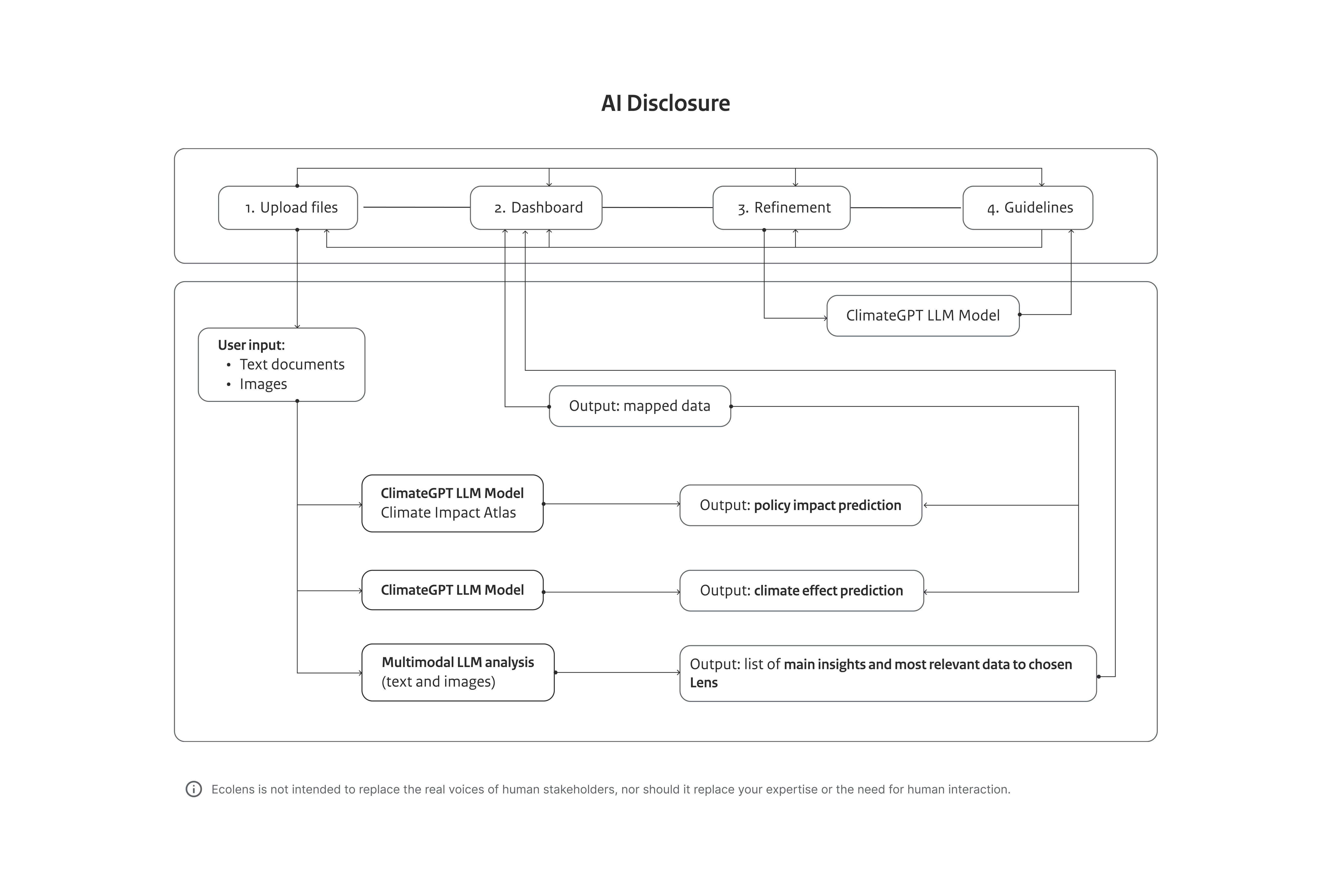
Policymaking domain
Beleidsdomein
AI-workflow integration
AI-workflow integratie
Through design-by-doing and iterative expert testing, we developed an AI solution for policy-making workflows. My expertise focused on conceptualizing and validating the generic policymaking process, including both direct and indirect stakeholders, and assessing AI's potential contributions.
Via design-by-doing en iteratieve expert-tests ontwikkelden we een AI-oplossing voor beleidsprocessen. Mijn bijdrage lag in het conceptualiseren en valideren van het generieke beleidsproces, inclusief directe en indirecte stakeholders, en het beoordelen van de potentiële bijdrage van AI.
Policymaking workflow
Beleidsontwikkeling workflow
Problem identification
Agenda setting
Policy development
Implementation
4
3
Monitoring and evaluation
Public opinion
Direct and indirect stakeholders
Directe- en indirecte stakeholders
Ministry
Workers and
labour unions
Companies and
industries
Municipalities
Politics
Non-governmental
organisations (NGOs)
1
2
Product focus
5
Concept
development
Concept
ontwikkeling
Concepting testing with SMEs
Explored various potential solutions. Validated concepts through testing with subject matter experts. Aligned technological capabilities with stakeholder needs. Experts suggested: Including all human stakeholders in the lens setup. Giving them a voice in the dashboard to ensure objectivity.
Conceptontwikkeling en testen met experts
We verkenden verschillende oplossingsrichtingen en valideerden concepten door tests met inhoudsexperts. Daarbij stemden we technologische mogelijkheden af op de behoeften van stakeholders. De experts adviseerden om alle menselijke stakeholders op te nemen in de lens-setup en hen een stem te geven in het dashboard om objectiviteit te waarborgen.
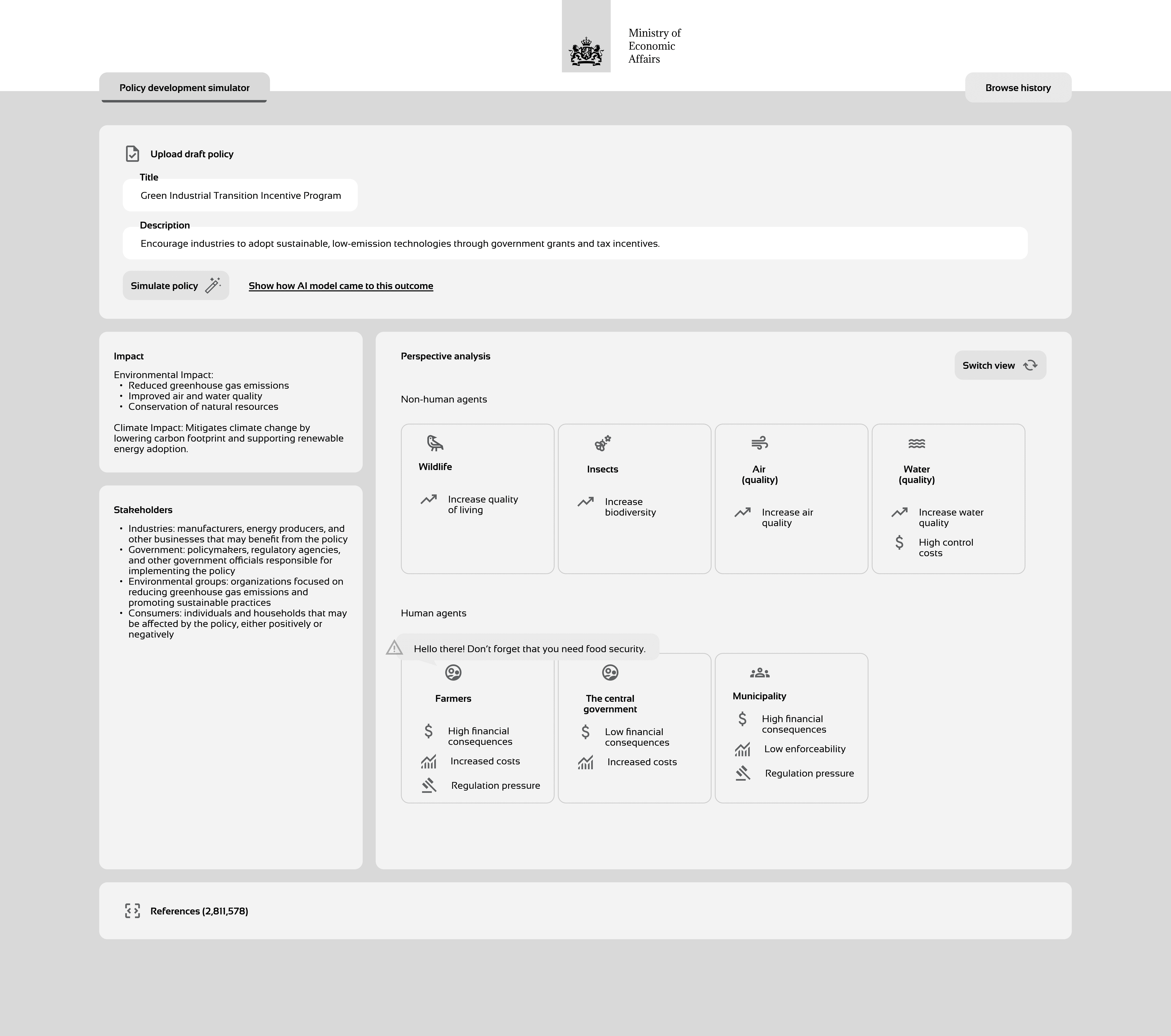
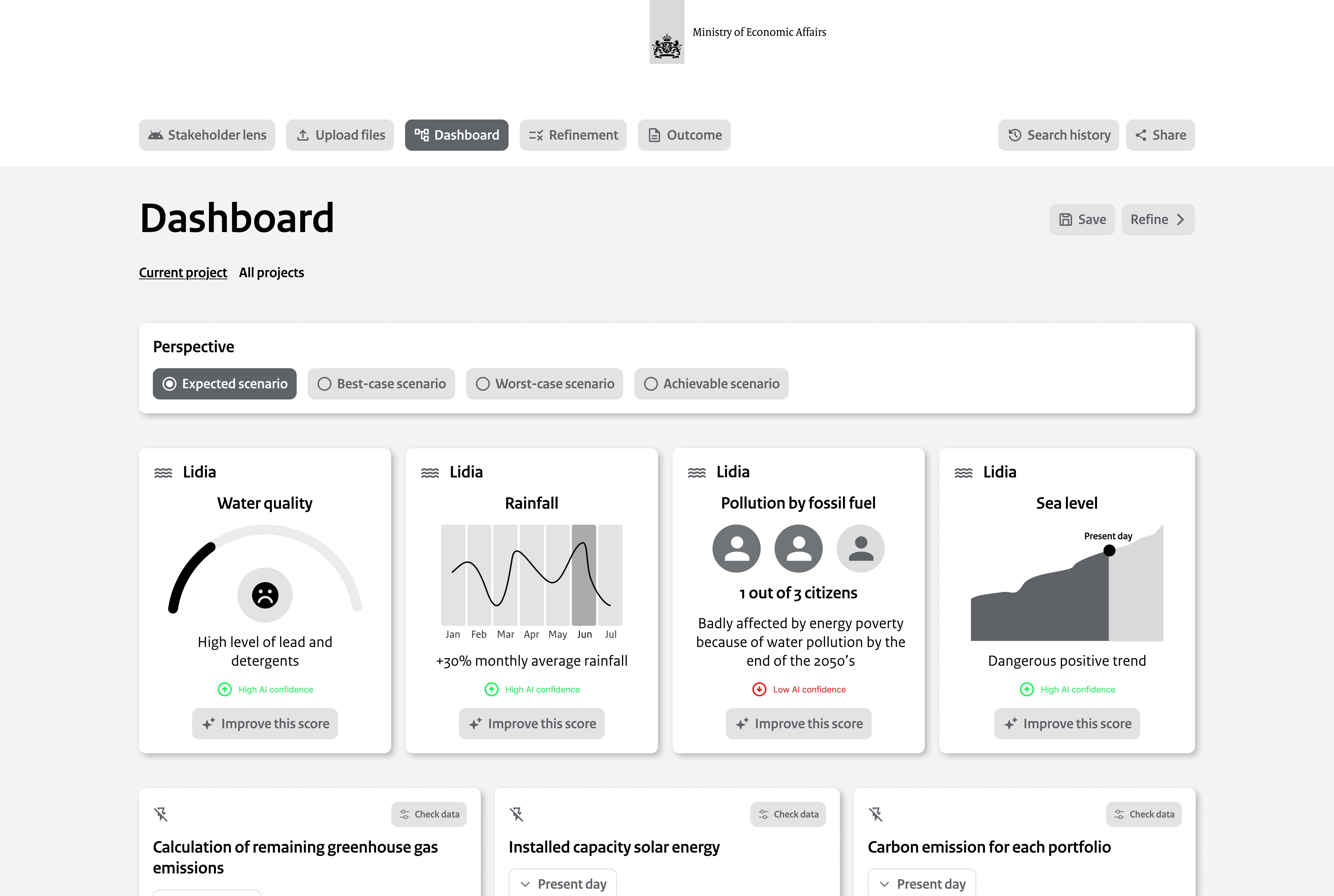
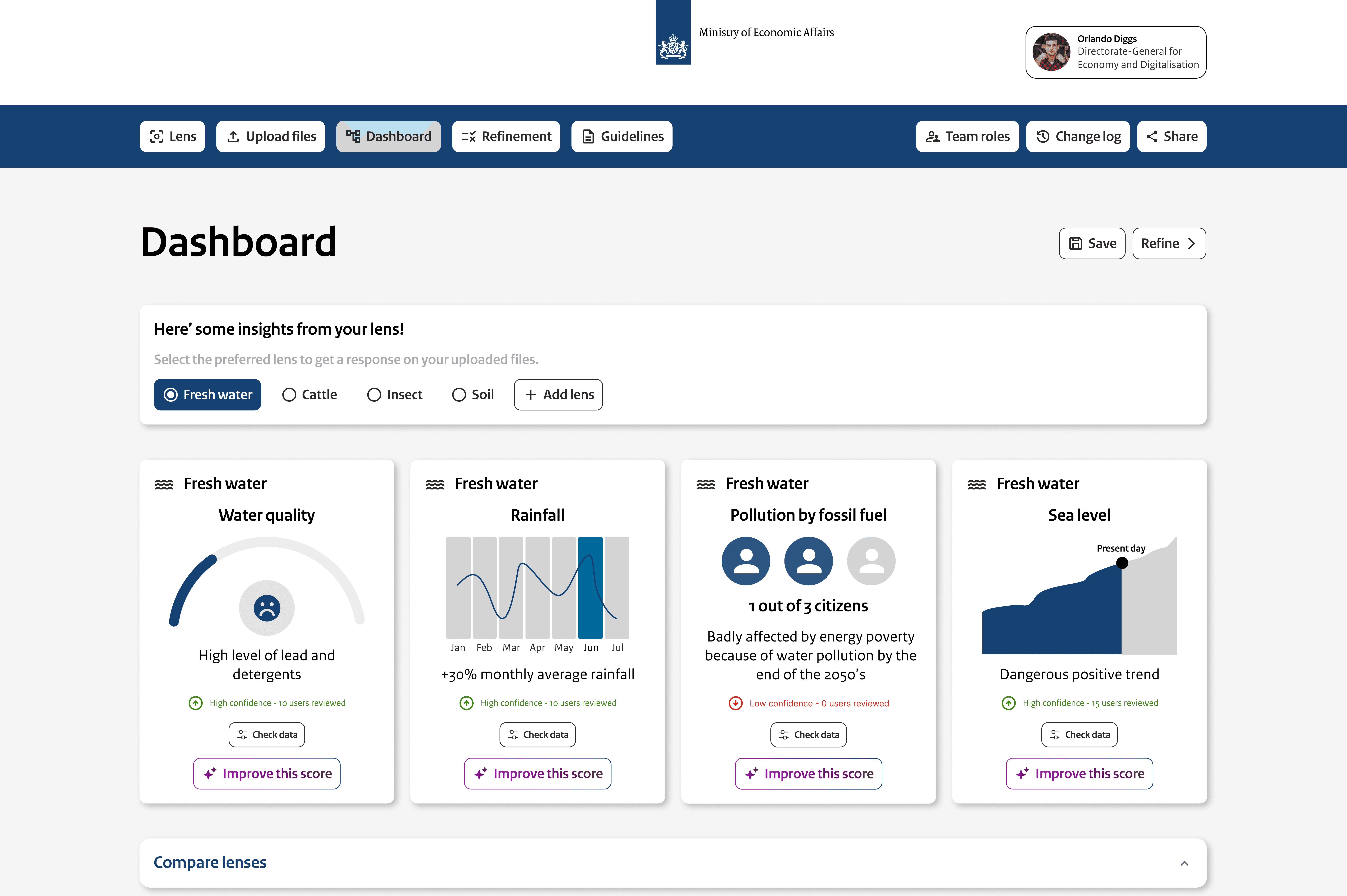
Prototyping
mid-fi and hi-fi
Prototyping
mid-fi en hi-fi
Iterating & hi-fi prototype testing
Sketching and iterating on initial ideas. Collaborating with a teammate to design a hi-fi prototype for testing purposes. Preparing and leading quick usability tests with SMEs to refine designs.
Iteratie & hi-fi prototyping
We werkten ideeën uit via schetsen en iteraties, ontwierpen samen een hi-fi prototype en voerden snelle usabilitytests met inhoudsexperts uit om de ontwerpen te verfijnen.
User testing
with policymakers
User testing
met beleidsmakers
Design validation & critical feedback
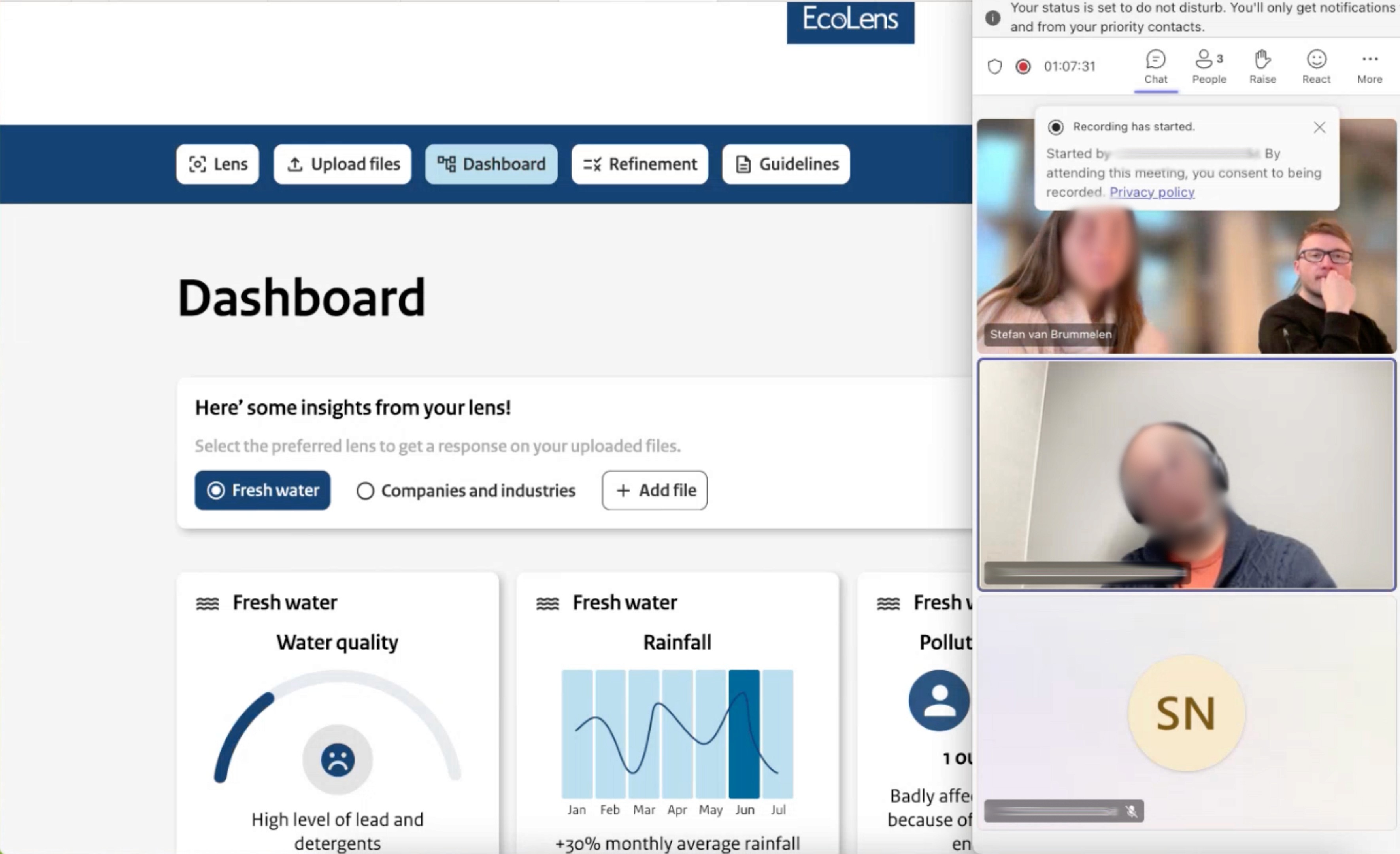
Policymakers confirmed the tool enhances informed decision-making by: Improving transparency Considering diverse stakeholder perspectives Critical feedback: Legal concerns about tool adaptability raised by the Ministry Experts worried about potential siloing of human stakeholder perspectives Experts recommend a comprehensive decision making overview for transparency and trust Changes made: Introduced a 'Change log' to address concerns
Design validatie en feedback
Beleidsmakers bevestigden dat de tool bijdraagt aan beter geïnformeerde besluitvorming door de transparantie te vergroten en verschillende stakeholderperspectieven mee te nemen. Tegelijkertijd gaven ze kritische feedback, zoals juridische zorgen over de aanpasbaarheid van de tool en mogelijke silo-vorming van menselijke stakeholders. Om deze punten aan te pakken, introduceerden we een ‘Change log’ om transparantie en vertrouwen te waarborgen
Personal reflection
Persoonlijke reflectie
Enterprise design skill development
Enterprise design skill ontwikkeling
Improved my skills in designing AI-integrated tools that promote transparency and trust.
Learned to transform expert feedback into iterative design cycles, balancing technical possibilities with user needs.
Deepened my understanding of AI in design and policy-making by:
Exploring existing climate-related forecast models relevant to the project.
Validating ideas with an AI expert, policy advisors, and policymakers.
Confirmed my interest in complex enterprise projects involving diverse user types and needs.
Recognized the reward of addressing conflicting stakeholder needs—especially when the project has societal impact.
Strengthened my belief that designers can act as intermediaries, carefully balancing stakeholder needs in system-affected contexts.
Ontwikkelde vaardigheden in het ontwerpen van AI-geïntegreerde tools die transparantie en vertrouwen bevorderen voor expert gebruikers.
Expert feedback snel vertalen naar iteratieve ontwerpverbeteringen, in balans met technische haalbaarheid (a.d.h.v. externe systemen) en gebruikersbehoeften.
Ontwerpen veelvuldig laten valideren door AI-experts en beleidsmakers, leidend tot verbetering van de aansluiting van het prototype op de praktijk.
Werken met uiteenlopende belangen, zoals het belang van de beleidsmaker zelf, publieke opinie omtrent de digitalisering van beleidsprocessen, niet-mensenlijke entiteiten zoals de natuur, waterkwaliteit en EU-richtlijnen.
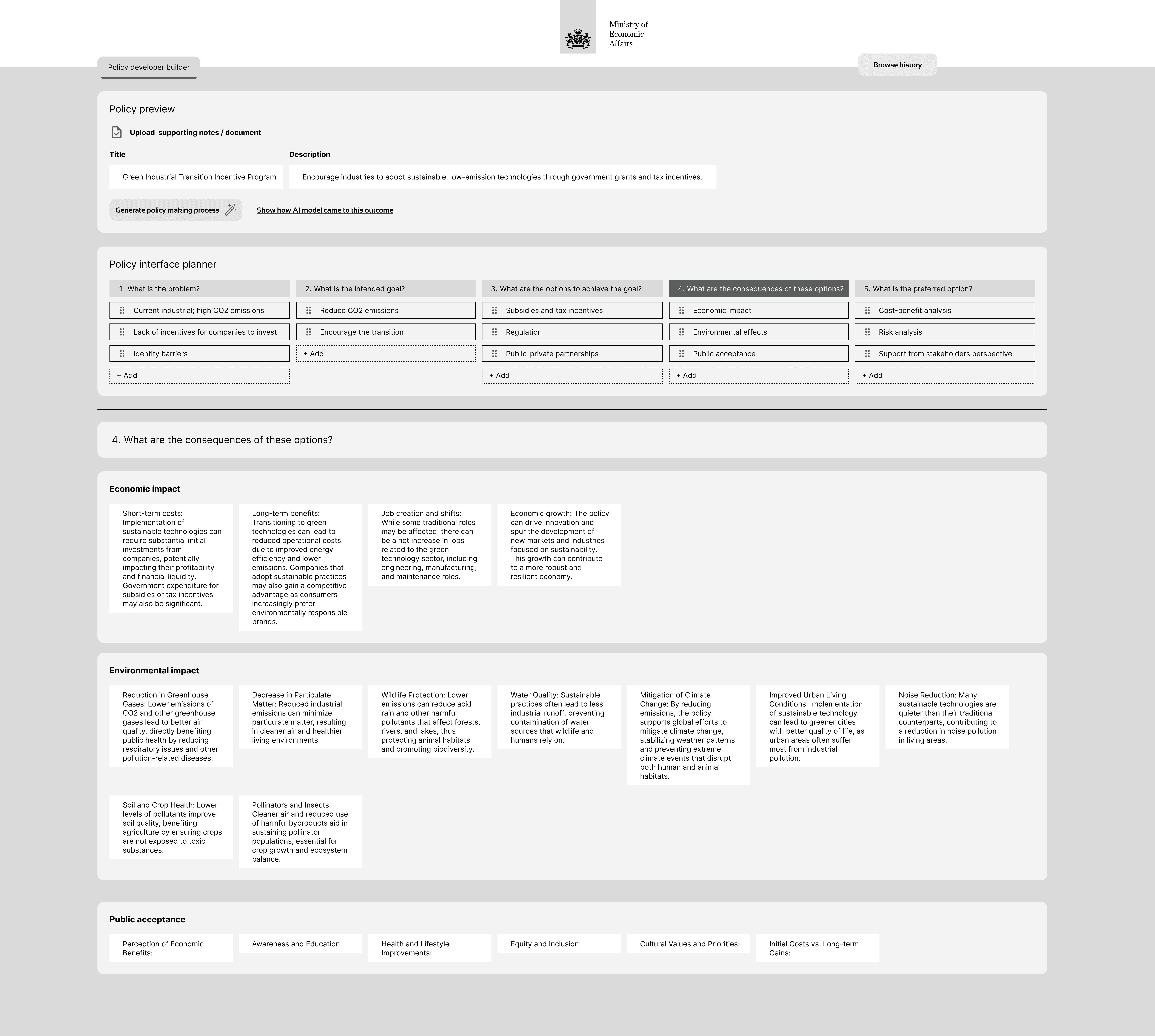
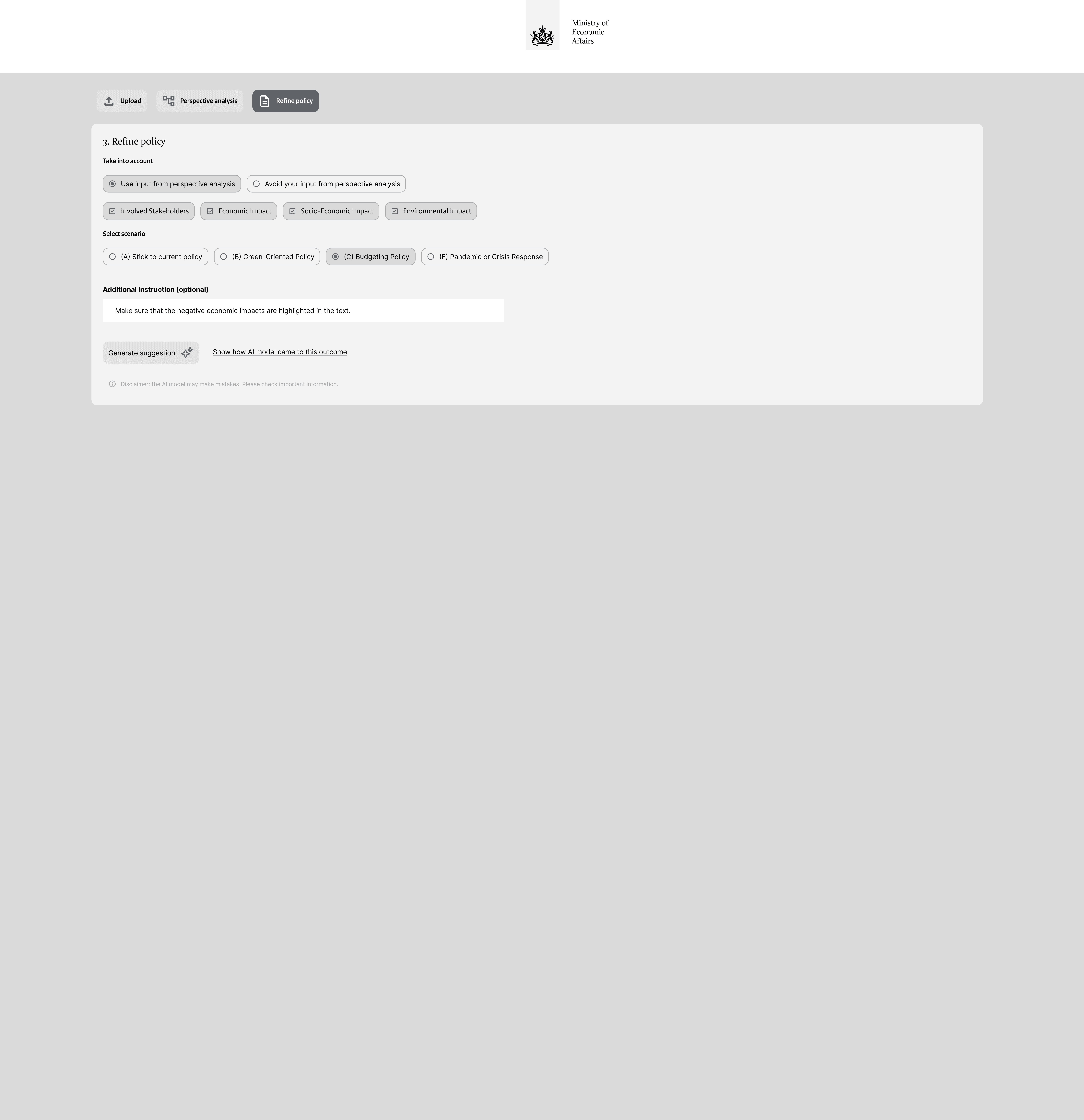
Mid-fidelity (proces-gerelateerde) schetsen
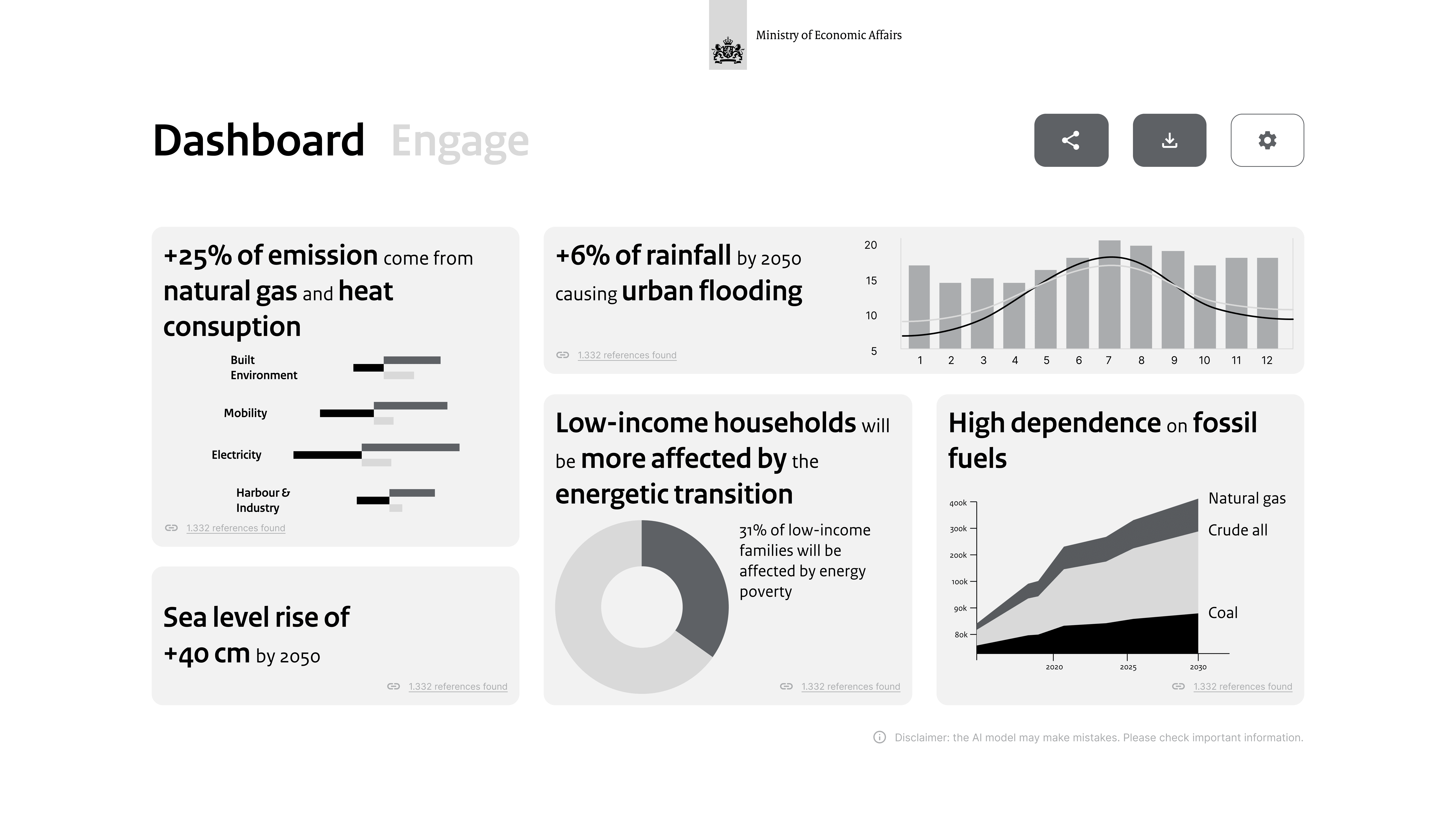
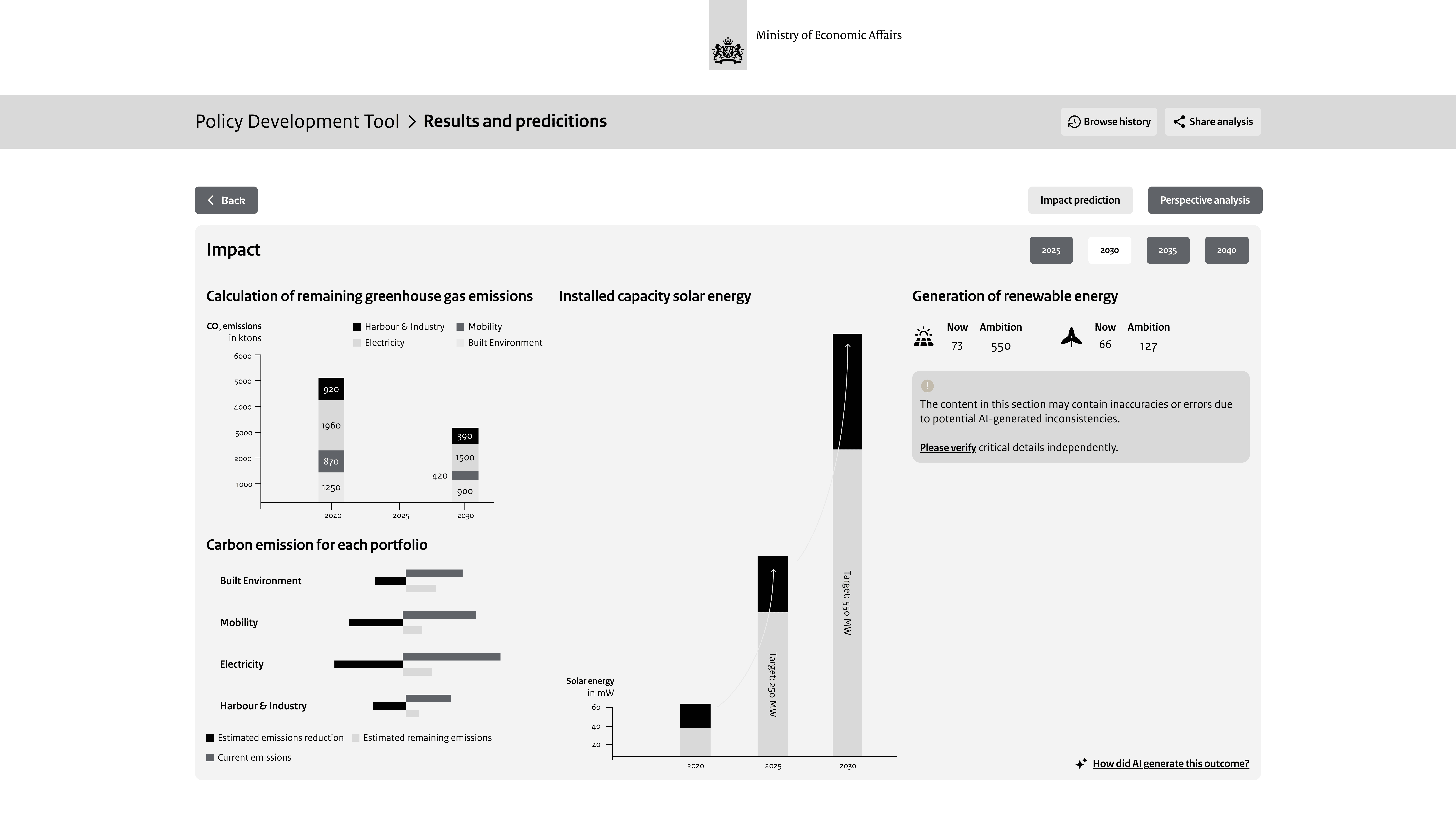
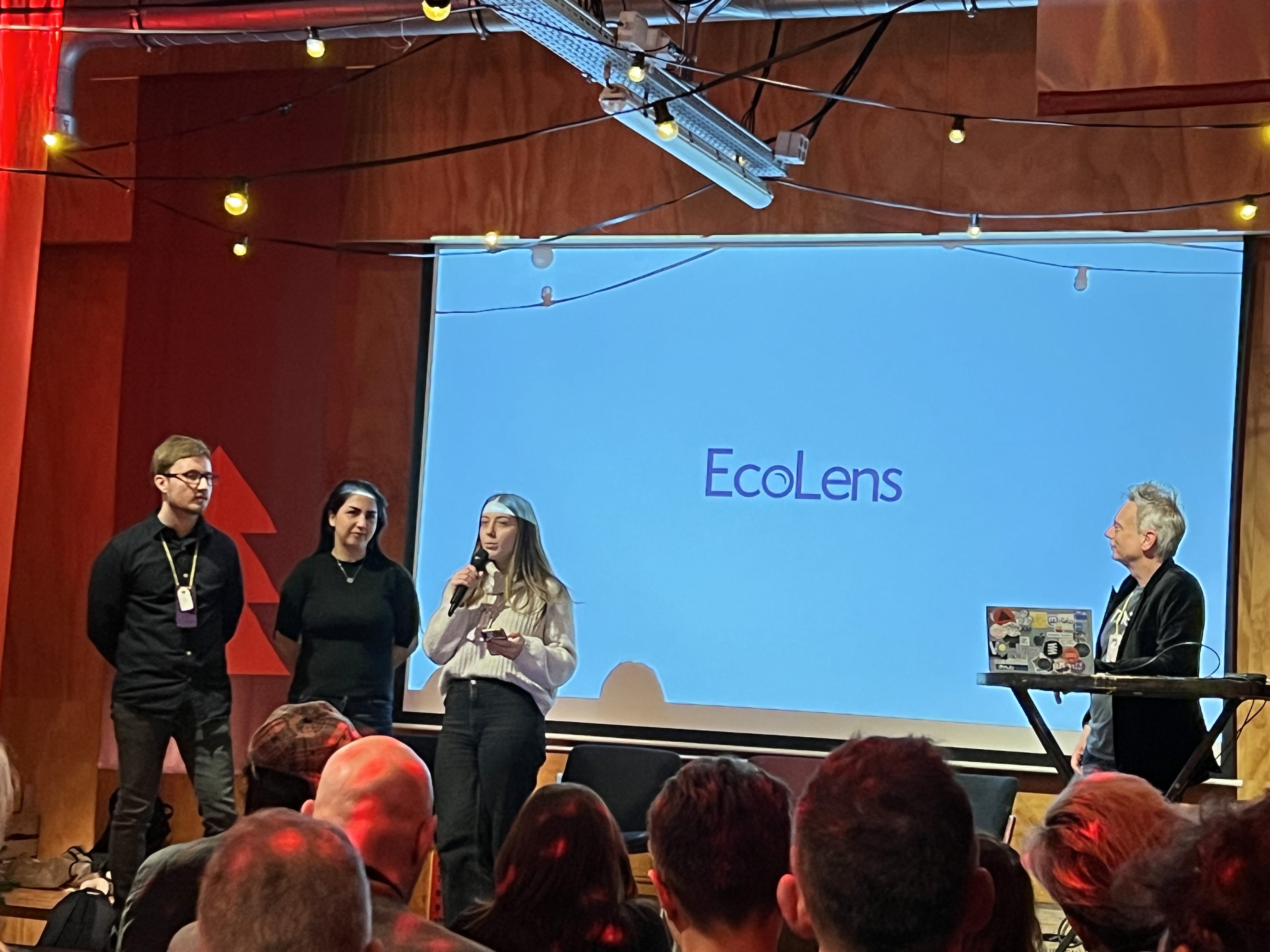
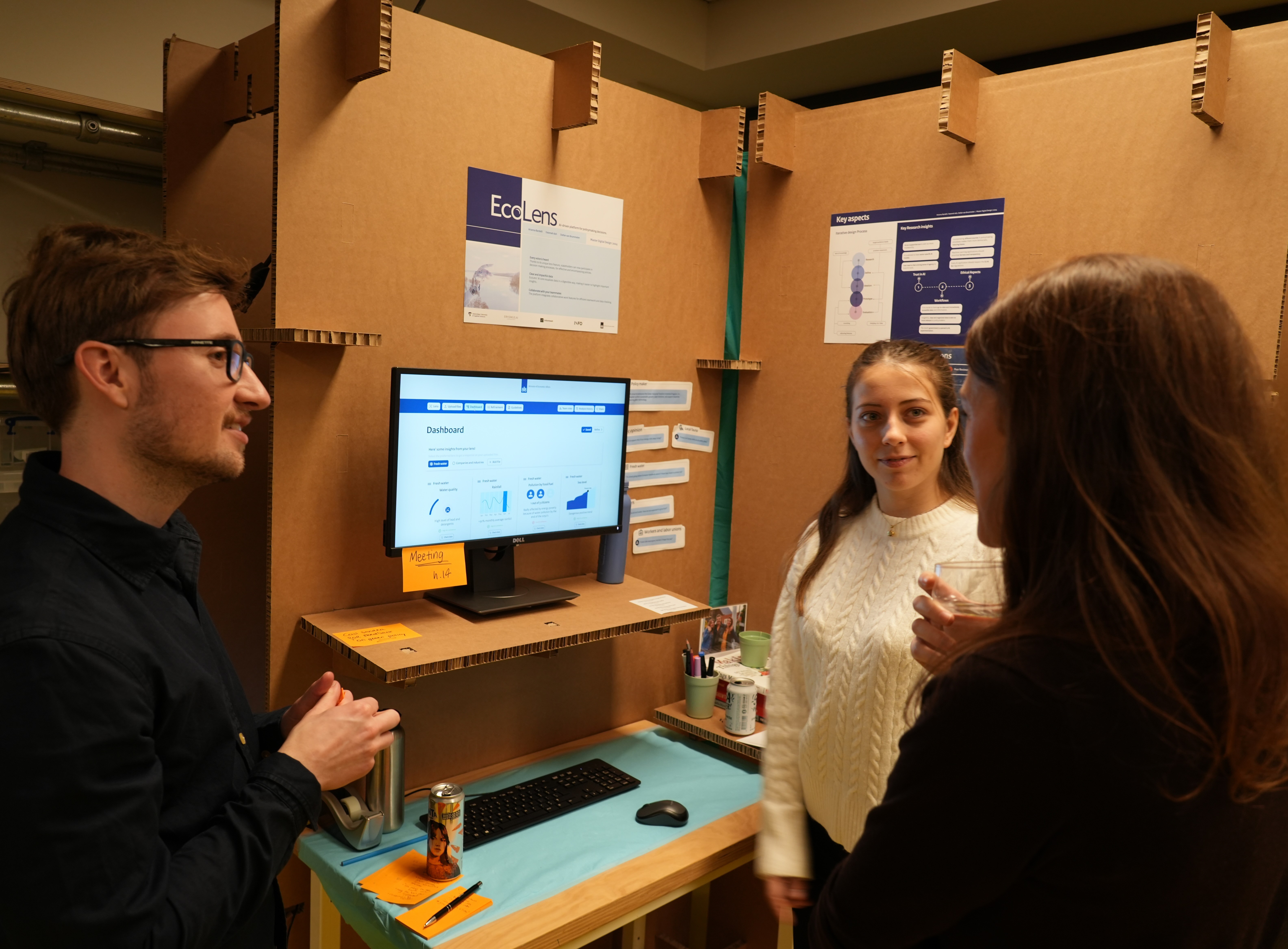
Concept geselecteerd voor ThingsCon 2024, onderdeel van de RIOT-publicatie 2025 (p.122).
"The State of Responsible IoT is a collection of essays by experts from the ThingsCon community of IoT experts and practitioners. It explores the challenges, opportunities and questions surrounding the creation of a responsible Internet of Things (IoT)."